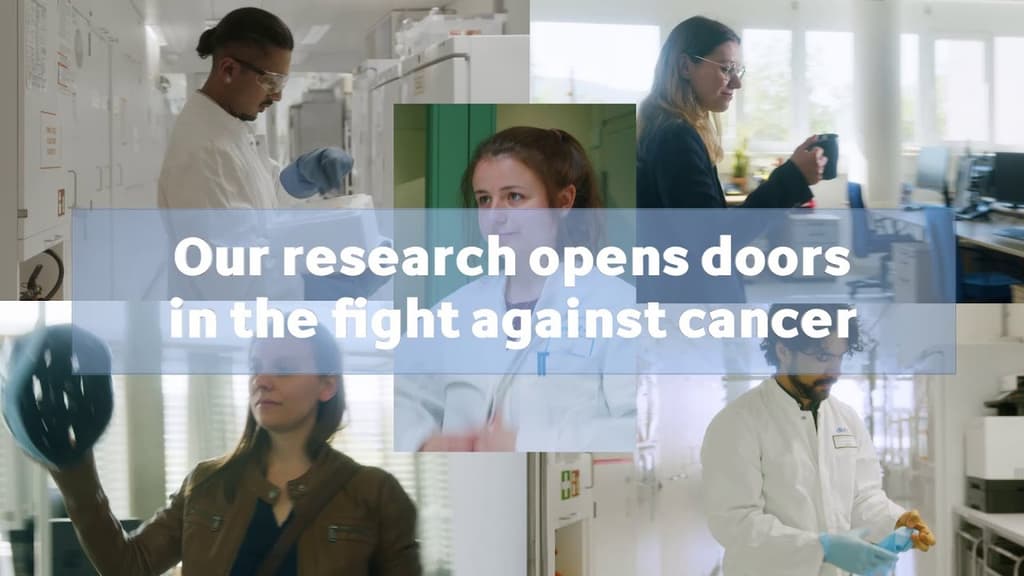
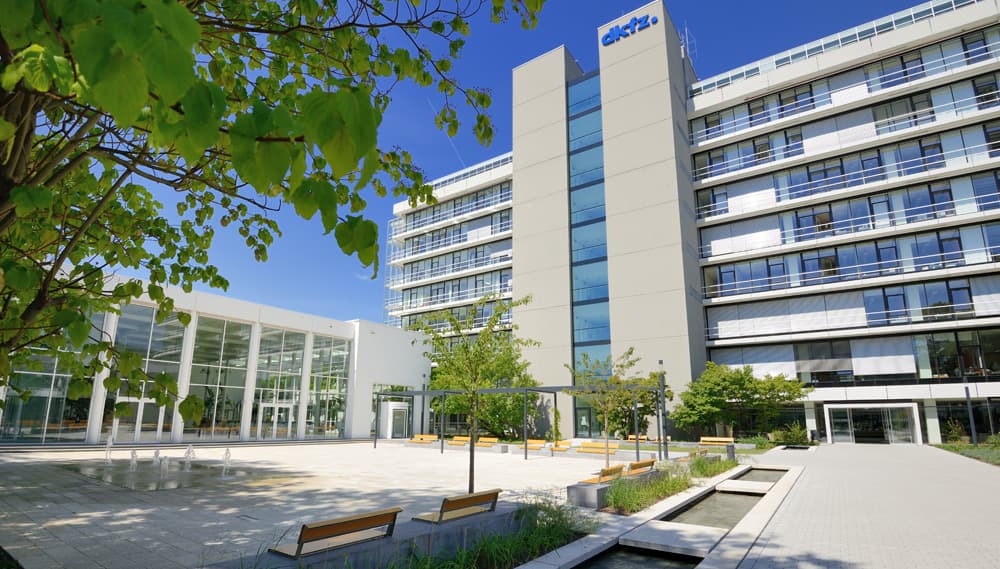
The German Cancer Research Center (DKFZ) is one of Europe's largest cancer research centers. "Research for a life without cancer" is the mission of our world-class scientists and all our team members.
We investigate how cancer develops, identify cancer risk factors and search for new cancer prevention strategies. We develop new methods with which tumors can be diagnosed more precisely and cancer patients can be treated more successfully. Every contribution counts - whether in research, administration or infrastructure. This is what makes our daily work so meaningful and exciting.
The Division of Medical Image Computing (MIC) at the German Cancer Research Center (DKFZ) in Heidelberg, starting in January 2027, is offering
PhD Positions in Agentic AI for Medical Image Analysis
Reference number: 2026-0230
The Division of Medical Image Computing (MIC) at the German Cancer Research Center (DKFZ) in Heidelberg is recruiting PhD candidates to develop AI agents that interpret medical images, use analysis tools, evaluate intermediate results, and adapt their approach based on evidence and feedback.
Candidates will join a collaborative research environment with clinical partners, extensive computing infrastructure, and connections to initiatives such as Helmholtz Imaging.
Your Tasks
We investigate how AI agents can combine medical images with clinical information, plan and execute analytical steps, learn from feedback, assess intermediate results, and respond appropriately to uncertainty or failure. Approaches may include reinforcement learning, multimodal learning, vision-language models, planning, tool-augmented language models, probabilistic modelling, and classical medical image analysis.
Candidates may work primarily in one of several application areas:
The individual PhD topic will be developed jointly based on the candidate's interests, expertise, and the methodological questions arising across these applications.
You will:
Your Profile
You should have:
Previous experience with medical data is helpful but not required. We also welcome candidates with strong machine-learning fundamentals who want to develop expertise in agentic AI.
What you can excpect:
Please submit:
We Offer
Excellent framework conditions: state-of-the-art equipment and opportunities for international networking at the highest level Access to international research networks Doctoral salary with the usual social benefits 30 days of vacation per year Flexible working hours Possibility of part-time work Family-friendly working environment Sustainable travel to work: subsidized Germany job ticket Unleash your full potential: targeted training and mentoring through the DKFZ International PhD Program and DKFZ Career Service Our Corporate Health Management Program offers a holistic approach to your well-being
Are you interested?
Then become part of the DKFZ and join us in contributing to a life without cancer!
Contact:
Constantin Ulrich Harsy
Phone: +49 (0) 6221/42-3552
Duration: The positions are initially limited to 3 years.
Application Deadline: December 2, 2026
Applications by e-mail cannot be accepted.
Please also note that we cannot return applications submitted by post.
We are convinced that an innovative research and working environment thrives on the diversity of its employees. Therefore, we welcome applications from talented people, regardless of gender, cultural background, nationality, ethnicity, sexual identity, physical ability, religion and age. People with severe disabilities are given preference if they have the same aptitude.
Notice: We are subject to the regulations of the Infection Protection Act (IfSG). Therefore, all our employees must provide proof of immunity against measles.
We investigate how cancer develops, identify cancer risk factors and search for new cancer prevention strategies. We develop new methods with which tumors can be diagnosed more precisely and cancer patients can be treated more successfully. Every contribution counts - whether in research, administration or infrastructure. This is what makes our daily work so meaningful and exciting.
The Division of Medical Image Computing (MIC) at the German Cancer Research Center (DKFZ) in Heidelberg, starting in January 2027, is offering
PhD Positions in Agentic AI for Medical Image Analysis
Reference number: 2026-0230
- Heidelberg
- Full-time
- Medical Image Computing
The Division of Medical Image Computing (MIC) at the German Cancer Research Center (DKFZ) in Heidelberg is recruiting PhD candidates to develop AI agents that interpret medical images, use analysis tools, evaluate intermediate results, and adapt their approach based on evidence and feedback.
Candidates will join a collaborative research environment with clinical partners, extensive computing infrastructure, and connections to initiatives such as Helmholtz Imaging.
Your Tasks
We investigate how AI agents can combine medical images with clinical information, plan and execute analytical steps, learn from feedback, assess intermediate results, and respond appropriately to uncertainty or failure. Approaches may include reinforcement learning, multimodal learning, vision-language models, planning, tool-augmented language models, probabilistic modelling, and classical medical image analysis.
Candidates may work primarily in one of several application areas:
- multimodal agents for prostate cancer diagnosis and treatment support;
- auditable analysis of longitudinal imaging for tumour-response assessment;
- federated multimodal agents connecting oral imaging with systemic health information; or
- or reinforcement learning for agents that navigate and integrate complex data across medical and other scientific domains.
The individual PhD topic will be developed jointly based on the candidate's interests, expertise, and the methodological questions arising across these applications.
You will:
- develop agents that combine medical images with clinical text and other information;
- investigate reinforcement learning for planning, tool use, feedback integration, and iterative improvement;
- apply agentic methods to segmentation, annotation, quantitative analysis, or scientific data exploration;
- establish rigorous evaluation methods covering accuracy, robustness, generalisation, uncertainty calibration, failure detection, and appropriate abstention; and
- collaborate with methodological and clinical researchers, publish your results, and contribute reusable software or benchmarks.
Your Profile
You should have:
- A master's degree in computer science, data science, mathematics, physics, engineering, or a related discipline
- A strong foundation in machine learning and strong Python programming skills
- Practical experience with a deep-learning framework such as PyTorch
- Experience in at least one relevant area, such as reinforcement learning, computer vision, language models, multimodal learning, or medical-image analysis
- An analytical and collaborative working style and good communication skills in English
Previous experience with medical data is helpful but not required. We also welcome candidates with strong machine-learning fundamentals who want to develop expertise in agentic AI.
What you can excpect:
- Scientific freedom to develop your own methodological research question
- Close supervision and exchange within a cohort of PhD researchers
- Access to extensive GPU infrastructure, medical-imaging resources, and established research software
- Collaboration with international machine-learning and clinical partners
- Support for conference participation, open-source contributions, and professional development
- Fully funded PhD submission
Please submit:
- your CV
- academic transcripts
- a brief research statement of no more than one page describing a question in agentic AI that interests you
- your preferred application area, or a ranking of the available areas
- your master's thesis or another representative piece of scientific work
- links to relevant publications, software, or code repositories, if available
- Instead of a generic motivation letter, please use your research statement to explain which scientific question you would like to investigate, why it matters, and how you might approach it
We Offer
Are you interested?
Then become part of the DKFZ and join us in contributing to a life without cancer!
Contact:
Constantin Ulrich Harsy
Phone: +49 (0) 6221/42-3552
Duration: The positions are initially limited to 3 years.
Application Deadline: December 2, 2026
Applications by e-mail cannot be accepted.
Please also note that we cannot return applications submitted by post.
We are convinced that an innovative research and working environment thrives on the diversity of its employees. Therefore, we welcome applications from talented people, regardless of gender, cultural background, nationality, ethnicity, sexual identity, physical ability, religion and age. People with severe disabilities are given preference if they have the same aptitude.
Notice: We are subject to the regulations of the Infection Protection Act (IfSG). Therefore, all our employees must provide proof of immunity against measles.